Share this article



Modern office buildings often feature large glass windows that create open, naturally lit workspaces. However, extensive glazing can also introduce challenges, including excessive heat, uncomfortable glare, rising cooling costs, and fading office interiors. Window film commercial offers a practical way to address these issues without replacing existing windows.
Two popular options are tinted and clear window film, each designed to meet different performance and aesthetic requirements. While tinted films can reduce incoming sunlight and provide greater visual shading, clear films can help manage solar heat while preserving the appearance of glass. Choosing between them depends on factors such as the building’s orientation, local climate, energy efficiency goals, and the amount of natural light occupants want to retain.
Understanding the differences between tinted and clear commercial window film can help building owners and facility managers make an informed decision that balances comfort, performance, and architectural appeal.
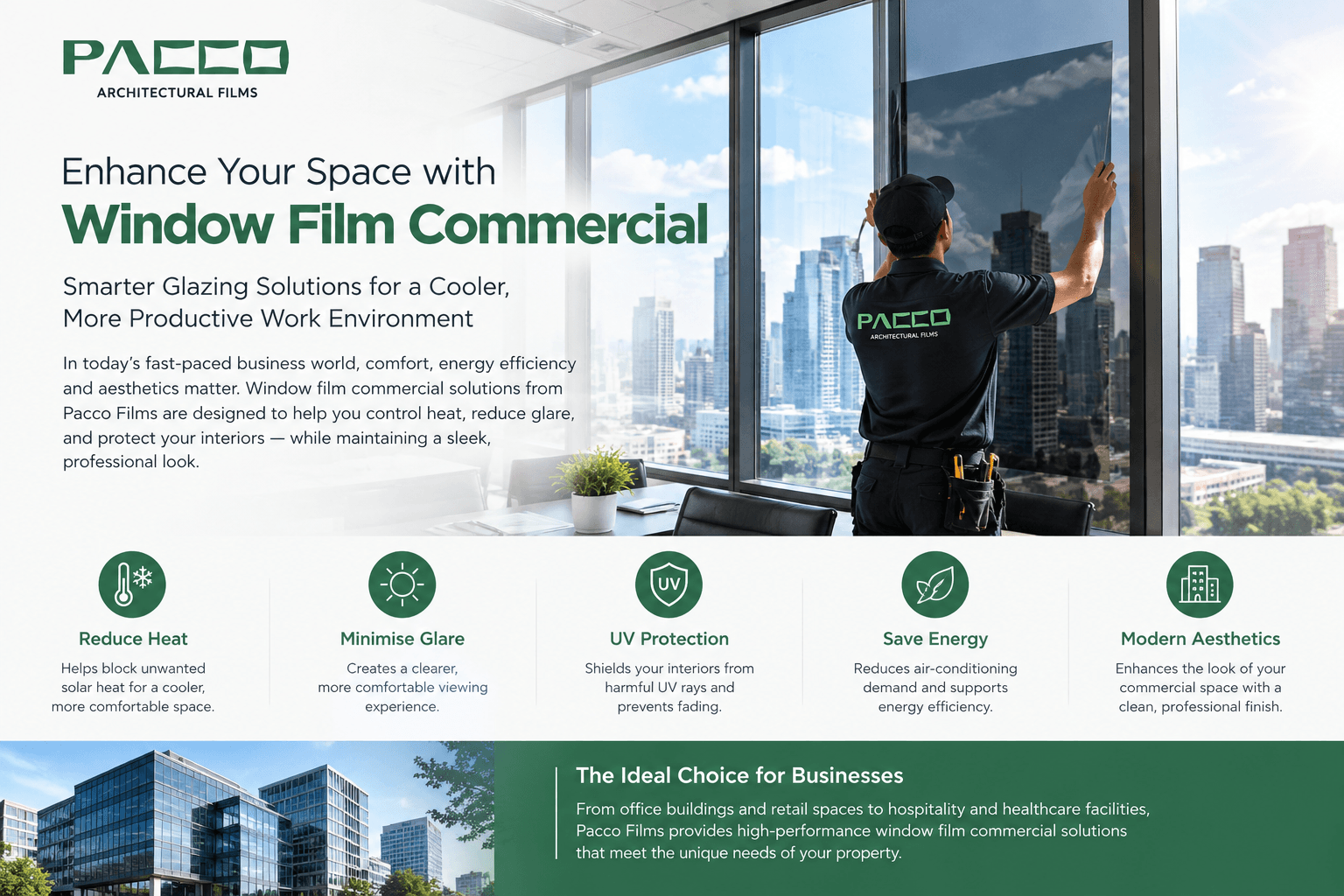
Tinted commercial window film uses a darker appearance to reduce the amount of visible light entering a building. Depending on the construction and specifications of commercial window tinting, it can also help control solar heat and glare, making it suitable for offices with direct sunlight exposure.
Its shaded appearance can improve visual comfort in workspaces where bright sunlight causes reflections on computer screens or makes meeting rooms uncomfortable. Certain tinted films can also provide daytime privacy, depending on the darkness of the film and lighting conditions.
However, a darker tint does not necessarily provide better heat rejection. The film’s material, solar performance, and visible light transmission are important considerations when selecting a suitable product for a commercial property.
Clear commercial window film is designed to preserve the natural appearance of glass while improving its performance. Many advanced clear films use spectrally selective technology to target portions of the solar spectrum responsible for heat gain while allowing substantial visible light to pass through.
This makes clear film an attractive option for modern offices that rely on daylight, unobstructed views, and transparent architectural designs. It can help reduce solar heat and glare without significantly changing the building’s exterior appearance.
Clear window film commercial is particularly useful for corporate offices, glass-fronted buildings, reception areas, and conference rooms where maintaining a bright, professional atmosphere is important. As with tinted options, actual performance varies by product, so technical specifications should guide the final selection.
Both options can improve the performance of commercial glazing, but their suitability depends on the building’s priorities and the film’s technical properties.
| Feature | Tinted Window Film | Clear Window Film |
| Appearance | Creates a darker, shaded look | Preserves a more natural glass appearance |
| Natural light | Usually reduces visible light transmission | Typically allows more visible light through |
| Heat rejection | Varies by film type and construction | Advanced spectrally selective films can reject significant solar heat |
| Glare control | Can provide effective glare reduction | Performance depends on visible light transmission and film technology |
| Daytime privacy | May provide some privacy under suitable lighting conditions | Generally offers limited privacy |
| Exterior aesthetics | Changes the appearance of windows | Maintains a more discreet appearance |
| Best suited for | Areas with strong glare and a preference for shaded glass | Offices prioritizing daylight, clear views, and subtle solar control |
| Selection priority | Balance shading with heat-control performance | Balance clarity with solar heat rejection |
Note: These are general characteristics. Actual performance depends on the specific film, glazing system, and installation conditions.
Heat gain through windows can increase the demand for air conditioning, particularly in buildings with extensive glass facades. Both tinted and clear films can help manage solar heat, but their effectiveness depends on the product’s solar heat gain coefficient, total solar energy rejected, and other performance specifications. For offices exposed to intense sunlight, compare technical data rather than relying on film color alone.
Natural light can make workplaces feel more open and inviting, but excessive brightness can cause eye strain and screen reflections. Tinted film may be appropriate where stronger shading is desired, while clear film can help preserve daylight. The right balance depends on the orientation of the windows, the placement of workstations, and the amount of direct sunlight the office receives throughout the day.
Reducing solar heat gain can help lower cooling requirements, potentially improving a building’s energy efficiency. However, the actual savings depend on climate, window area, existing glazing, HVAC efficiency, and building operations. Choose commercial solar control window film based on documented solar performance and assess how it works with the building’s existing energy systems.
A consistent exterior appearance may be important for corporate headquarters, commercial towers, and premium office spaces. Clear commercial window film installation is often preferable when maintaining the original look of the facade is a priority. Tinted film may be more suitable when a shaded appearance complements the building’s design. Before installation, consider the appearance of the film from both inside and outside the building.
Not every window film is suitable for every type of glass. Existing glazing, including insulated glass units and certain coated windows, can be affected by the film’s heat absorption and thermal properties. Consult a qualified installer to assess glass compatibility, manufacturer specifications, warranty requirements, and expected service life before making a decision.
Choosing commercial or office window film involves more than improving the appearance of glass. The real priority is finding a solution that reduces solar heat, minimizes glare, preserves natural light, and supports energy efficiency. In tropical climates, these factors become especially important for maintaining comfortable indoor spaces while managing cooling costs.
This is where Pacco Films brings a focused approach to commercial window film solutions. We have developed a spectrally selective sputtered film specifically for tropical climates, designed to reduce incoming heat and help cut energy consumption by up to 30%. Our technology also helps protect interiors from fading, maintain clear visibility, and deliver lasting performance for offices, retail spaces, and other commercial properties.
Final Note
Choosing between tinted and clear commercial window film comes down to finding the right balance between solar heat control, natural light, visual comfort, and building aesthetics. While tinted films offer a shaded appearance, advanced clear films can provide effective solar control while preserving unobstructed views. The best choice is one that meets your building’s performance requirements without compromising its design.
If you’re planning to improve office comfort and energy efficiency, explore the window film commercial solutions available from us at Pacco Films. With spectrally selective sputtered films developed for tropical climates, we help commercial properties manage heat, protect interiors, and maintain clear visibility. Visit our website now to discover options designed to help manage solar heat, reduce glare, and maintain the appearance of your commercial space.
The best option depends on the building’s needs. Tinted film may suit offices requiring stronger shading, while clear film is often preferable when preserving daylight, natural views, and the original appearance of glass is important.
Yes. Advanced clear films can reduce solar heat gain while allowing substantial visible light to pass through. Their effectiveness depends on the film’s technology and documented performance specifications.
Not necessarily. A darker appearance does not automatically indicate better heat rejection. Spectrally selective clear films can deliver strong solar performance without requiring a dark tint.
Commercial window film can reduce solar heat gain and potentially lower air-conditioning demand. Actual energy savings depend on the building’s climate, glazing, HVAC system, and the film selected.
Evaluate solar heat rejection, visible light transmission, glare reduction, aesthetics, glass compatibility, and durability. Consulting a qualified window film specialist can help identify an appropriate solution for your building

West-facing rooms can become uncomfortably warm during the afternoon as sunlight streams through windows and heats indoor surfaces. In Singapore,…

Oct 28, 2026

Oct 23, 2026

Sep 25, 2026